Why Sweat Smells — and Why It’s Not Your Fault
Your body is intelligent. It’s your bacteria that sometimes misbehave.
Sweat itself doesn’t actually smell
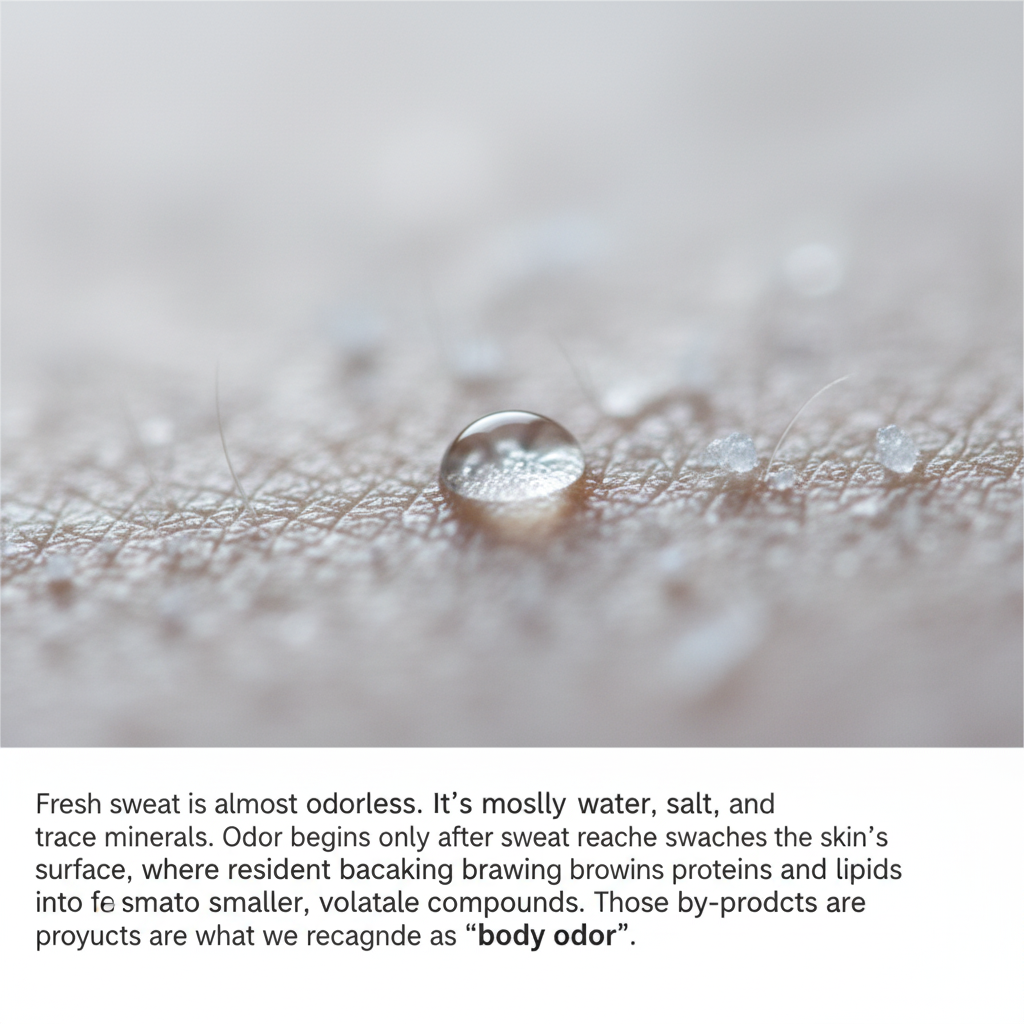
Fresh sweat is almost odorless. It’s mostly water, salt, and trace minerals.
Odor begins only after sweat reaches the skin’s surface, where resident bacteria start breaking down proteins and lipids into smaller, volatile compounds. Those by-products are what we recognize as “body odor.”
The real difference lies in your skin bacteria
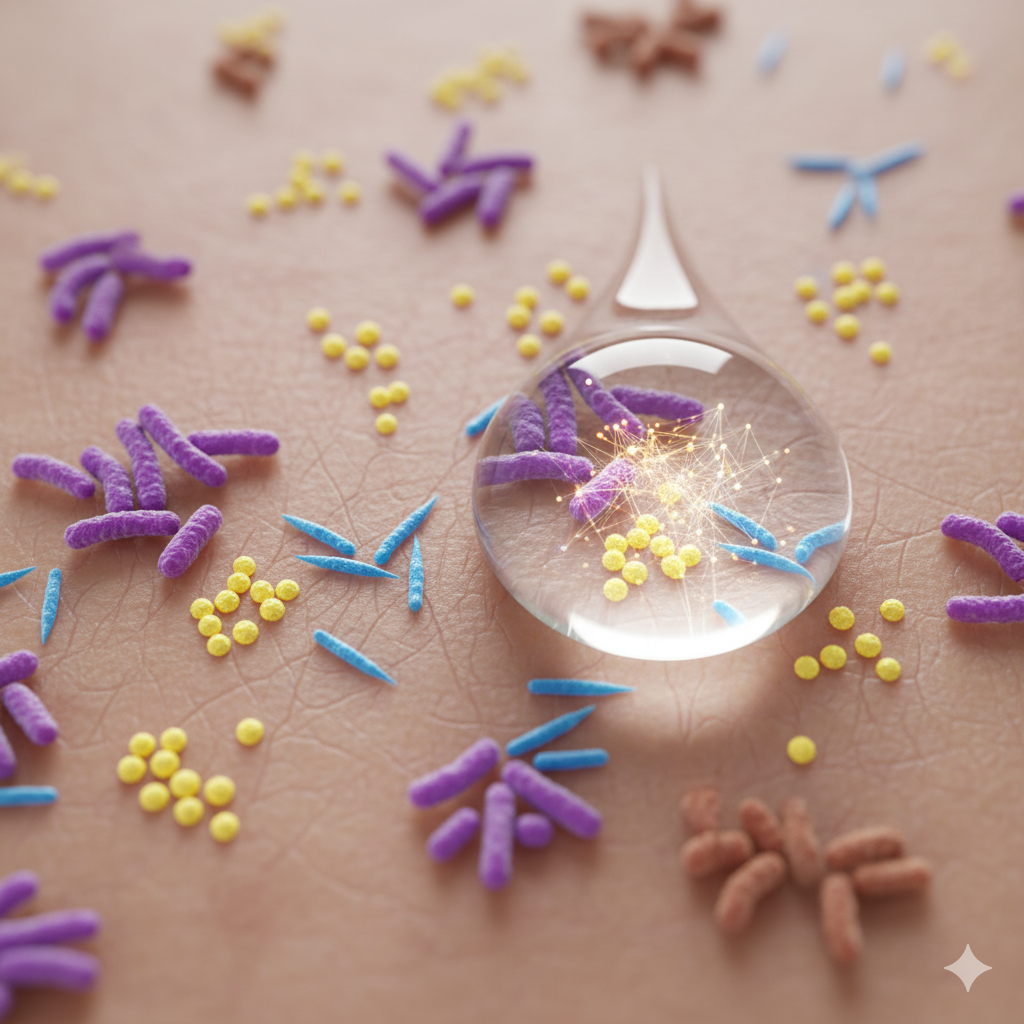
Each person has a unique community of microorganisms on their skin—the microbiome.
Some of these bacteria are harmless; others excel at turning sweat molecules into smelly gases.
Dominant bacteria Typical scent description
Corynebacterium onion- or garlic-like
Staphylococcus hominis sharp or acidic
Micrococcus luteus slightly sweet or honey-like
Brevibacterium metallic or “feet-like”
Your particular combination forms a personal scent signature, as individual as a fingerprint.
\
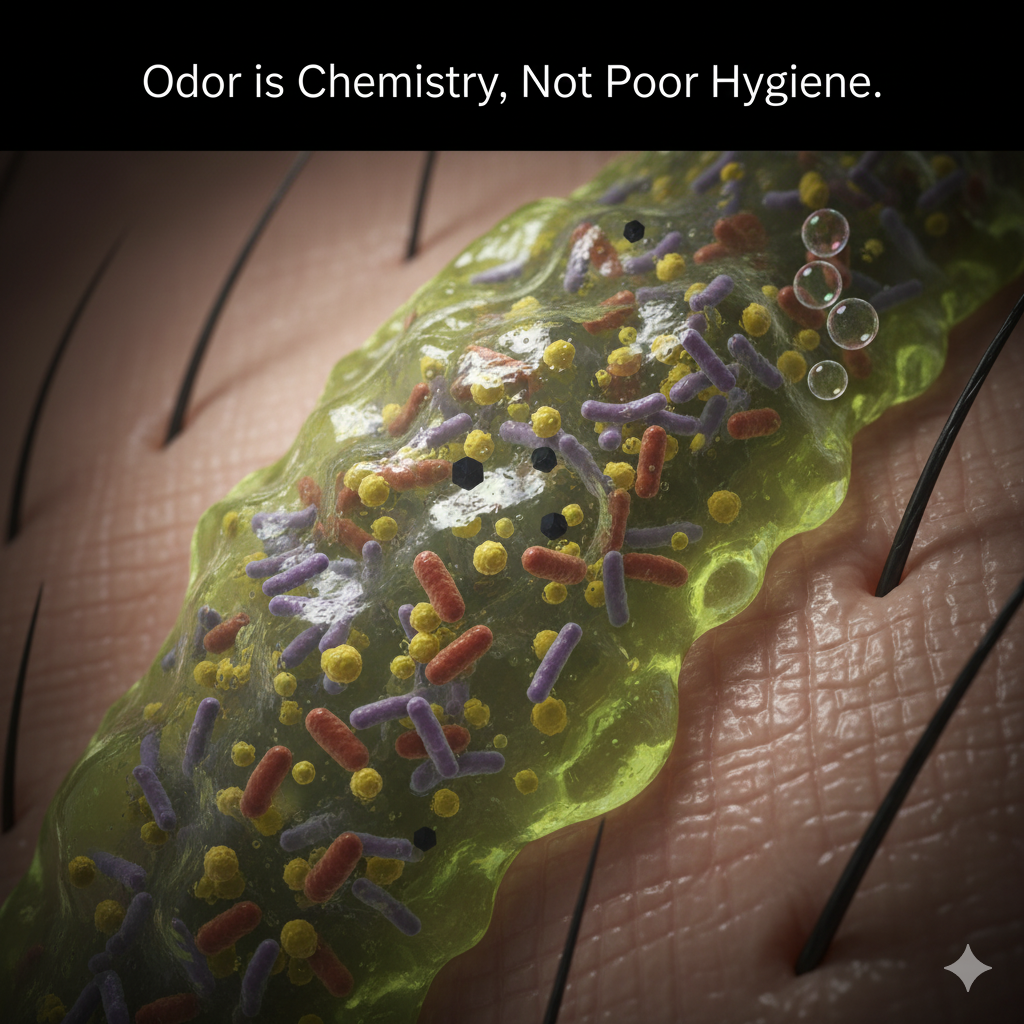
Odor is chemistry, not poor hygiene
Persistent odor often comes from a microscopic film called a biofilm—a thin layer where bacteria cluster and protect themselves from soap or deodorant. Once a biofilm forms, even regular washing can leave odor molecules trapped.
Many people notice that a deodorant works for months, then suddenly stops; the change is usually bacterial, not personal.
Sweat chemistry changes with stress, hormones, and diet
Two types of glands produce sweat:
Eccrine glands—found almost everywhere—make watery sweat for cooling.
Apocrine glands—in the underarms, scalp, and groin—release thicker, protein-rich fluid that bacteria prefer.
Other influences matter too:
Stress and anxiety trigger stronger, hormone-driven sweat.
Hormonal shifts (thyroid changes, menstrual cycle, menopause) alter composition.
Foods such as garlic, onions, and red meat can subtly modify body scent.
Your odor pattern can shift week to week as these factors fluctuate.
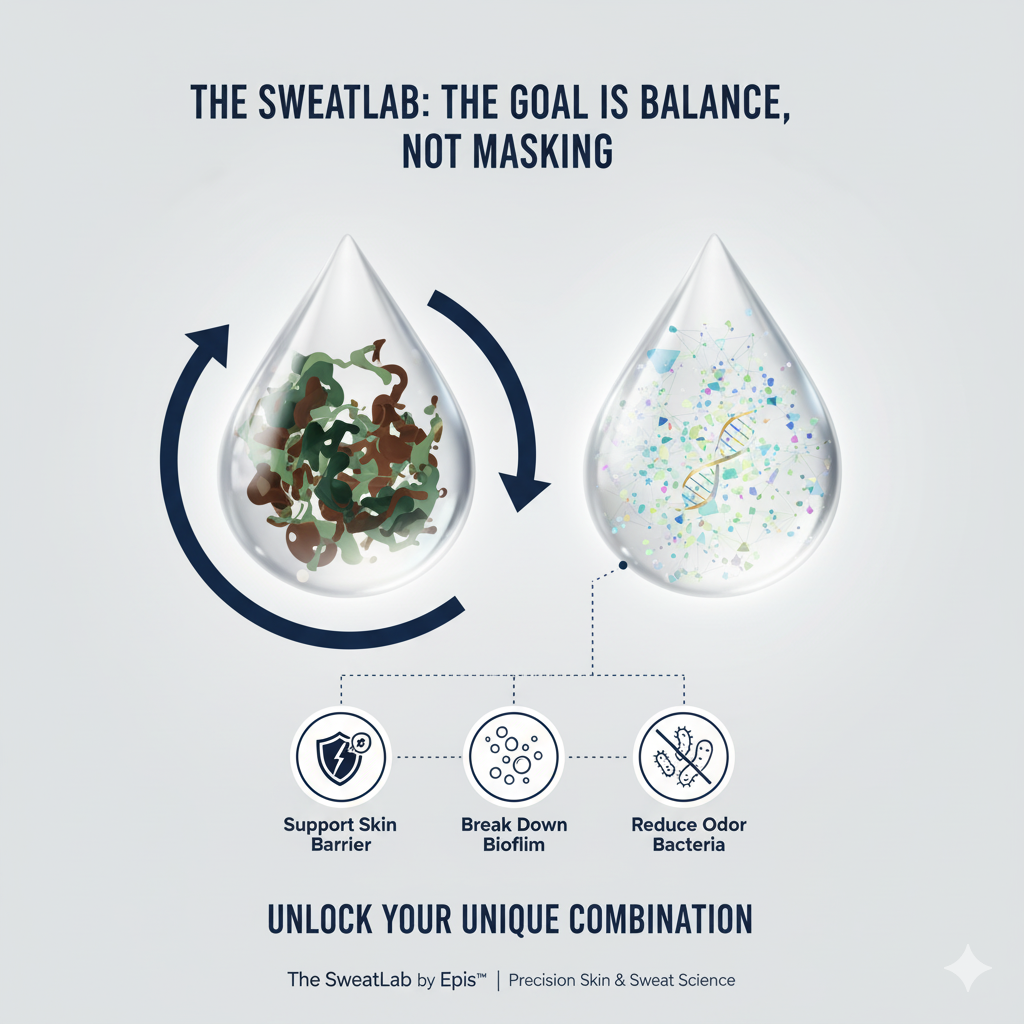
The goal is balance, not masking
Odor control works best when it restores your skin’s balance instead of covering scent.
This means reducing odor-producing bacteria, breaking down biofilm, and supporting the skin barrier.
That is what The SweatLab by Epis™ helps you understand—your unique combination of sweat chemistry, bacterial activity, and barrier behavior.
From your assessment you receive a Sweat Profile Type (for example, “Sulfuric-Reactive” or “Musty-Microbial”) with tailored suggestions such as:
Cleansers containing sulfur, zinc, or salicylic derivatives to limit odor bacteria
Toners or mists with witch hazel or magnesium to rebalance skin pH
Deodorants that neutralize odor compounds rather than merely masking them
The takeaway
Body odor is a biochemical event, not a character flaw.
If your deodorant no longer works or your scent has changed, the cause is probably your biofilm and microbiome—not a lack of cleanliness.
Once you understand your profile, you can rebalance the system and regain control naturally.
Find Out Your Sweat Profile
Take The SweatLab Assessment to discover your personal sweat chemistry, biofilm behavior, and most compatible product strategy.
Start the Assessment →